Upcoming rides I'm leading:
Nothing on the schedule.

Show blog entries about: Upcoming rides | Ride reports | My own training

DBD/Seismic Ride 4: Crystal Springs (8/13/2011)

Date: Saturday, August 13
Meet time: 8:00 a.m.
Ride-out time: 8:30 a.m.
Meeting place: Three blocks west of the Mountain View Caltrain and VTA station, in the overflow parking lot at the corner of Evelyn Avenue and Franklin Street. (map)
City: Mountain View
Rain policy: Heavy rain cancels
Category: 2 - moderate pace (10-12 mph)
Terrain: 3 - rolling hills with some steep climbs
Miles: 60

Description:

This is the fourth in a weekly series of eight training rides to help you get ready for the Double Bay Double and/or Seismic Challenge. These rides will gradually increase to about 80 miles and will take place every Saturday from downtown Mountain View.

Although this ride doesn't venture much beyond the Peninsula foothills, we'll visit them over and over and over again in a day with lots of small but significant climbs. In order of appearance, we'll go up West Loyola Drive and Taaffe in Los Altos Hills, Bunker Hill, Polhemus, and Highland/Jefferson, plus all the smaller climbs between those points. This is an ideal route to help you get ready for similar climbs in both DBD and Seismic. The good news is that the last 15 miles are mostly downhill and flat.

Total climbing is about 3,600 feet. Be sure to bring plenty of water and electrolyte replacement, especially if it's hot. The route has many turns, sometimes in short succession, so it's essential that you have a map holder or binder clips so you can safely refer to your route sheet while riding.


RSVPs are requested but not required.

How much climbing is that?

So, you say you climbed 6,500 feet today? What does that mean? The sad answer is that, depending on what tools you're using to calculate elevation gain, it could mean just about anything. The major ride-mapping programs report vastly different climbing numbers for the very same route, as recorded in a GPX file for a 50-mile ride that I did today.
  • Raw GPX file: The file collected by my Strava Android app recorded 4,026 feet of climbing. This is already understood to be an unreliable number because the phone is not always a trustworthy source of accurate elevation.
  • Strava: 2,868 feet, using the USGS topographic database.
  • Map My Ride: 1,955 feet, computed from the GPX file.
  • Map My Ride: 1,969 feet, drawing the route myself in the program.
  • Ride with GPS: 5,275 feet. Its elevation profile is much more jagged, suggesting that the total is so much higher because no smoothing is done on the curves.
  • Bikely: Could not import the GPX file. However, Bikely is down so much these days that it's really not worth using anymore. (Update: I was finally able to draw, but not save, the route in Bikely, and I got 2,579 feet.)

When someone says a ride has a certain amount of climbing, it's important to know what they're using to measure it, so you can make an informed comparison. I've used Bikely for the past several years because, despite all of its faults, it produced elevation data that appeared to be very close to reality. Nowadays, however, I'm trying to use Strava when possible (but I'm still too cheap to pay for its premium service).

DBD/Seismic Ride 3: Kings Mountain (8/6/2011)


Date: Saturday, August 6
Meet time: 8:00 a.m.
Ride-out time: 8:30 a.m.
Meeting place: Three blocks west of the Mountain View Caltrain and VTA station, in the overflow parking lot at the corner of Evelyn Avenue and Franklin Street. (map)
City: Mountain View
Rain policy: Heavy rain cancels
Category: 2 - moderate pace (10-12 mph)
Terrain: 4 - long hills; steep climbs
Miles: 54

Description:

This is the third in a weekly series of eight training rides to help you get ready for the Double Bay Double and/or Seismic Challenge. These rides will gradually increase to about 80 miles and will take place every Saturday from downtown Mountain View.

Kings Mountain is one of the signature climbs of the Peninsula, topping out at an elevation of 2,421 feet. (That's just a little bit less than Mt. Tam!) It's a long but mostly consistent climb of about 7%, so it's not stupidly steep. But you definitely need to pace yourself to have enough energy to make it to the top with grace and aplomb. After reaching the summit, we'll head back into Woodside on the Highway 84 descent, and then we'll travel up Cañada Road so we can descend Edgewood as well. After all that climbing, we'll do an easy return to Mountain View on Alameda de las Pulgas and Foothill Expwy.

Total climbing is about 3,200 feet. Be sure to bring plenty of water and electrolyte replacement, especially if it's hot.


RSVPs are requested but not required.

DBD/Seismic Ride 2: Stevens Canyon (7/30/2011)


Date: Saturday, July 30
Meet time: 8:30 a.m.
Ride-out time: 9:00 a.m.
Meeting place: Three blocks west of the Mountain View Caltrain and VTA station, in the overflow parking lot at the corner of Evelyn Avenue and Franklin Street. (map)
City: Mountain View
Rain policy: Heavy rain cancels
Category: 2 - moderate pace (10-12 mph)
Terrain: 3 - rolling hills with some steep climbs
Miles: 50

Description:

This is the second in a weekly series of eight training rides to help you get ready for the Double Bay Double and/or Seismic Challenge. These rides will gradually increase to about 80 miles and will take place every Saturday from downtown Mountain View.

This week, we head up Stevens Canyon to the end of the paved road -- a gradual but persistent climb that takes us to an elevation of 1,125 feet. Next, we'll climb Mount Eden (but not Pierce!) and head into Saratoga for our first rest stop. Then it's over to Los Gatos and back into our second rest stop, which will be at the same location. (A savvy cyclist can figure out an easy short cut.) We finish with an all-new out-and-back climb: Prospect Road to the Fremont Older Open Space Preserve. After that, it's an easy return back to Mountain View.

Strava reports total climbing on this ride of about 2,870 feet. Take it nice and mellow, or hammer away on your own ... it's your choice.


RSVPs are requested but not required.

DBD/Seismic Ride 1: Alpine Road (7/23/2011)


Date: Saturday, July 23
Meet time: 8:30 a.m.
Ride-out time: 9:00 a.m.
Meeting place: Three blocks west of the Mountain View Caltrain and VTA station, in the overflow parking lot at the corner of Evelyn Avenue and Franklin Street. (map)
City: Mountain View
Rain policy: Heavy rain cancels
Category: 2 - moderate pace (10-12 mph)
Terrain: 3 - rolling hills with some steep climbs
Miles: 44

Description:

Welcome to a weekly series of eight training rides to help you get ready for the Double Bay Double and/or Seismic Challenge! These rides will gradually increase to about 80 miles and will take place every Saturday from downtown Mountain View. The main focus is on gradually building your ability to deal with moderate hills, but we'll hit a bunch of other training points as well as we travel throughout the Peninsula and South Bay, with maybe a venture or two into the East Bay.

To get things started, we'll visit the Arastradero Nature Preserve and then head up Alpine Road. But where most training rides turn at Roberts Market, we'll continue going ... all the way to the end of the paved road, another 3.4 miles up into the foothills. It's mostly a moderate climb with just a couple of very brief moments of steepness, and the road surface is excellent and lightly traveled. We'll pause briefly at the top and then turn around and go back down the way we came.

Then, we'll pass through Woodside and head a bit up Cañada Road, where we'll do Jefferson Avenue in the downhill direction. Finally, it's an easy spin along Alameda de las Pulgas and Foothill Expressway back to Mountain View.

Before attempting this ride, you should have completed at least one ride of 30 miles in the past month. If you've been off your bicycle since the end of ALC10, don't make this your very first ride -- do at least one practice ride in advance.


RSVPs are requested but not required.

Ride report: Altamont Pass Double Metric (5/14/2011)

Go, riders!

It's almost a given that a 200-kilometer ride is going to be "epic," and yesterday's group of 34 intrepid riders was certainly treated to another epic ride. Where heat of 100 degrees or higher has been a problem on this ride so many times in the past, this year instead we had a chilly, cold wind that kept our lunchtime temperature just in the lower 50s ... with a 20 mph wind on top of it. And a few riders finished their day in Mountain View with a brief but surprisingly strong rain shower that opened up over the city during the 6 p.m. hour.

The weather was just one of the factors that contributed to a day of many lessons learned.

First on the list came even before the ride began: the importance of rest. Our shockingly early 5 a.m. meet time was just like you'll have on Day 1 of the ride, which means waking up significantly earlier. And almost every day of the ride, you'll be up and going by 5 a.m. in order to be ready for the 6:30 a.m. (on most days) ride-out. The night before a big event such as this certainly can increase one's anxiety, and the adrenaline of completing each day of the ride will keep you going during evenings in camp, but getting sufficient sleep is one of the most important things that you need to do during ride week. There's a 9:30 p.m. quiet time in camp, and everyone should show proper consideration for those trying to get some shuteye. Mornings in camp start early, with many tents beginning to stir around 4:30 a.m. (even earlier in some roadie sections ... all those dining-tent workers have to be awake long before the rest of us).

With seven days of non-stop riding, it's also vitally important that you remember the lesson, given several times here already, that you pace yourself. Yesterday's ride began with 30 easy, flat miles, and it was quite tempting to ride near 100% of your ability. The risk is that, by doing so, you end up paying for it later in the day with a greatly reduced pace ... or, in some cases, not even being able to complete the entire day. Consider the math: You could ride half the day at 15 mph and half at 11 mph, or you could do the whole day at a much less stressful 13 mph and still finish at about the same time.

Listening to your body is also important. If you ended your ride early because of physical issues, then there is no doubt whatsoever that you made the right choice. No ride is more important than your long-term health, either during training season or on the event. On a very long or multi-day ride, it can sometimes be tough to distinguish between the normal stress that you experience and stress that can be potentially harmful, so don't be afraid to listen to the sage advice of others. And if you're unsure, then always err on the site of caution.

The same can be said for being aware of mental issues, since they can affect your ability to ride safely. Here's my case in point from yesterday. As we rode back from Livermore to Pleasanton (into that wind!), my mind started to go into bad places, aided no doubt in part by my legs that were aching from not nearly enough riding in the past two weeks. One of the messages drilled into us at ride leader school is that the rides are always about you and never about me. Well, as my miles slowly ticked past 70, I was sinking too far into me, me, me -- which left me unable to carry out my ride leader duties and help the rest of you. So, when I reached Rest Stop 4, I accepted the offer of a ride in a SAG vehicle to the next rest stop. With that break, I was able to resume riding in Hayward and complete the rest of the day ... and the break gave me time to stop being wrapped up in myself.

As you ride on the event in June, it's way too easy for your mind to wander off focus and land in places that are either happy or not so happy. Either way, this creates a safety hazard not just for you but also for the riders around you. The ride requires concentration and focus at all times, especially with more than 2,500 other riders on the road; save the meditation and rumination for rest stops, camp, and after the event.

But let's get back to more positive thoughts! You've just completed what is essentially a randonneuring event, which takes you into an even more rarefied stratum of cycling. If you wish, a whole new world of events and community has opened for you. One of the largest such groups is Randonneurs USA, which produces events across the country. Locally, RUSA-affiliated groups are in San Francisco and Santa Cruz; in fact, the Santa Cruz group is in the middle of a 600-kilometer event (in this weather, eeek) as I write this. The current president of RUSA is based in Santa Cruz and just happens to be an ALCer as well. The style of most randonneuring events is very similar to what we've experienced on our training rides: route sheets but no route markings, rest stops at stores and restaurants, and similar time limits. Even if you never progress beyond the 200-kilometer level in randonneuring, there's still a wide variety of rides and routes available.

What's next? That's it for the Mountain View training rides for this season. But many of you also ride the Sunday rides out of Sunnyvale, and that group is running a 41-mile celebration ride next Sunday two weeks from today ... and all Mountain View riders are invited to participate. Details and RSVP are here.

And if ALC10 isn't enough for you, two other events to benefit the San Francisco AIDS Foundation are coming up this fall. Now in its fourth year, Seismic Challenge is changing format this year to a one-day, 100-mile ride on Sunday, Oct. 2, down the coast from Fort Bragg to Guerneville. The day before, riders will be transported from San Francisco to Willits for a ride on the historic Skunk Train. The event is limited to 300 riders and has a $600 fundraising minimum.

New this year is the Double Bay Double, which I'm producing through Different Spokes San Francisco. On September 24 and 25, we'll start from our familiar spot in downtown Mountain View and ride 208 miles in two days to Marina (just outside Monterey) and back on a scenic loop route. The event is limited to 50 riders and, although there's no fundraising minimum, riders are strongly encouraged to help reward the foundation for their support in helping DSSF set up this event. (In fact, you can support my ride here. Giant thanks to the many donors who have already done so!)

Ride one event, or ride both! In these challenging economic times, the San Francisco AIDS Foundation needs our help more than ever. I plan to lead training rides out of Mountain View again beginning around mid-July to help riders get ready for both rides; watch ridewithchris.org for details.

As many of you have heard by now, I'm not riding in ALC10. It was a bittersweet decision for me, and I'll admit to more than a few feelings of sadness as the event approaches. But it was a choice I had to make for a number of reasons that were about me and not about the ride. I still plan to show up somewhere during the week, perhaps even more than once, so don't be surprised to see me traipsing around camp or perhaps even on the road.

This concludes our Distance Training rides for 2011. I'd like to thank the numerous ride leaders and support drivers who were part of our team and who helped keep you safe, fed, and hydrated ... and even serenaded with music at more than a few locations. Even though I'm usually the public face of these rides, I couldn't do it without the tireless help of these amazing volunteers. But most of all, of course, thank you for riding. Whatever your reasons for riding, you're making a bold statement, and you're providing visibility, awareness, and funds. I've been honored to make many new friends on these rides, and I've been especially touched by the community that's spontaneously formed. The AIDS/LifeCycle community continues year-round, and it's a community where I know I can find a source of strength and affirmation. We focus on one week in June, but the other 51 weeks are part of the magic, too.

Have a safe and successful ride in June, and thank you for being part of AIDS/LifeCycle.

Photos by Dennis Soong

Ride report: Distance Training #9 (4/30/2011)

Go, riders!

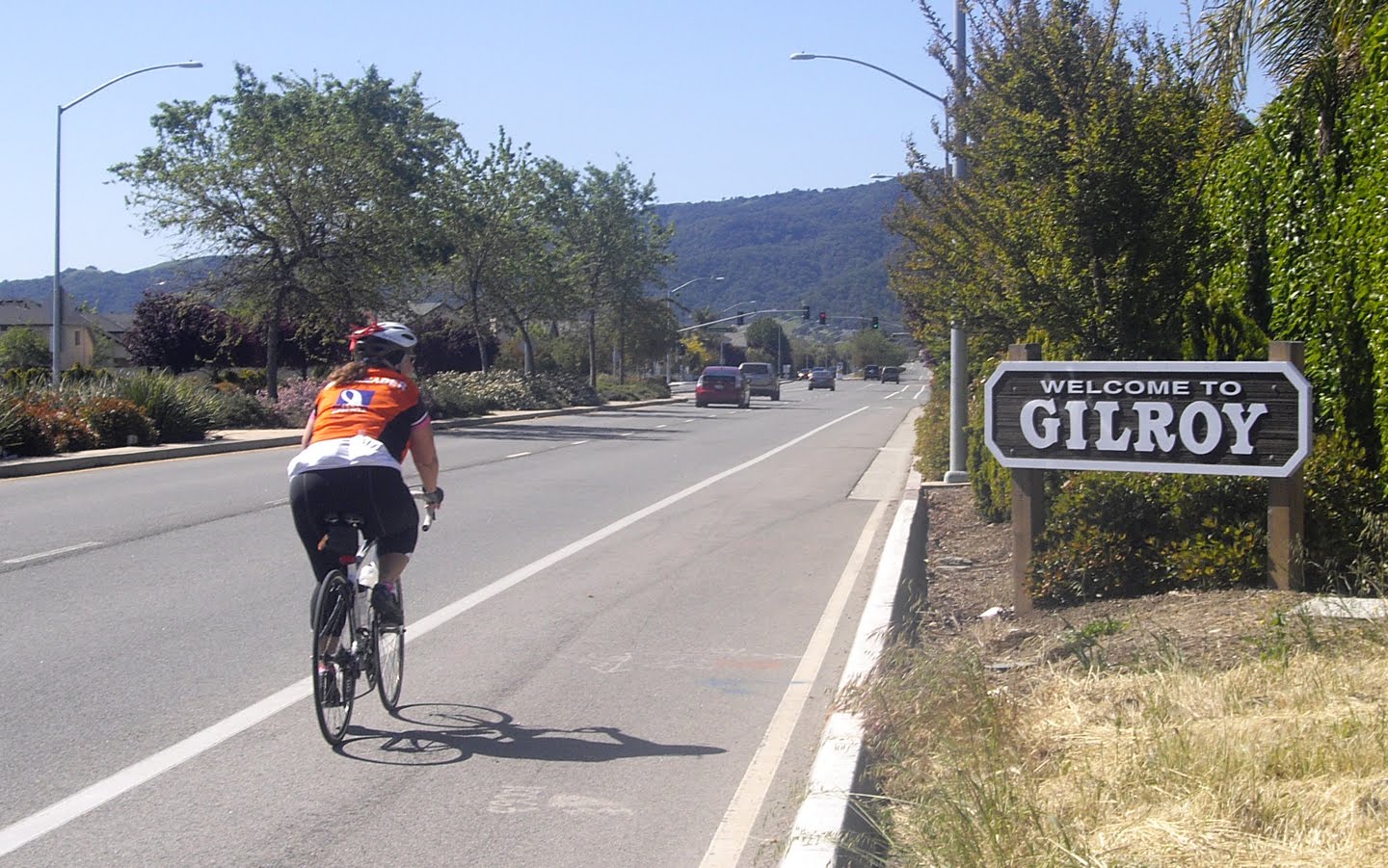
Our group of 37 brave riders had an absolutely awesome 55-mile ride today! Just one little problem, however: After we got to Gilroy, we had another 55-mile ride that most of us probably considered somewhat less than absolutely awesome.

Yes, the wind can give ... and the wind can take it all back. As we enjoyed the unusually brisk tailwinds around the reservoirs on our way to Gilroy, most of us figured out that our good fortune would soon come to an end. That's why ALC rides from San Francisco to Los Angeles and not the other way around! In June, the winds in coastal California are generally out of the northwest and west, and this gives us a big boost on several parts of the route, most notably the end of Day 2 and the end of Day 4.

ALC veterans who remember Day 5 of ALC8 or ALC9 probably felt a case of deja vu today. For the past two years, the Day 5 route has gone westbound from Solvang to Lompoc, directly into the wind. And that wind was even stronger than what we experienced today. The good news is that, this year, the Day 5 route has changed; not only is it about 25 miles shorter, it probably won't be subject to those nasty headwinds.

But weather is finicky, perhaps even more finicky these days than in the past. Last year, we even had some headwinds out of the east on part of Day 7. Although the route is designed to avoid traditional headwinds, anything can happen, and today you got some valuable experience in how to cope with headwinds, even if you don't particularly like them. Gear down, and aim to keep your cadence -- the rate at which you spin your pedals -- about the same as your normal rate. Don't worry about your speed being less. If you have experience riding in your drops, get down in that position to reduce your wind resistance (but don't lose sight of your surroundings). But remember, no drafting is allowed in ALC, even when the wind is crappy.

Conversely, when you have a nice tailwind, it often helps to sit more upright, even if you normally ride in your drops. By increasing the profile you present to the wind, you get an even bigger assist.

Even taking all that advice to heart, however, I was definitely feeling all used up by the time we reached San Jose today. And that was too bad, because conditions definitely improved somewhat after that. So I had to resort to a technique that I seem to use way too often: riding in a "degraded" mode in order to finish the day. I was generally down about two to three gears from where I'd normally be. I was taking many more short breaks (one to two minutes, perhaps every 5 miles or even more often). And, sure enough, I made it all the way to Mountain View, even though I came this close to taking the light-rail bailout. As always, it's a ride and not a race.

We also learned a few valuable lessons about weather and the environment today. This was a particularly dry day, much more so than on past rides, and the roaring wind didn't help either. And it was warmer than on most of our recent rides, with an official high today of 73F in San Jose. Most importantly, the relative humidity in San Jose at 3 p.m. was a bone-dry 17%. Did you notice that you needed much more water today than on past rides? And did you react properly to that? Alas, I did not, and one of the most telling signs of that is how often and how much you need to use the bathroom during a ride. I'll spare you the details, but I'm sure you're all too familiar with your performance in that area today. I could feel my throat getting dry, and that was a warning sign that I did not properly hydrate, even though I was taking in more fluid per hour than on any other ride this season.

In June, when we leave the immediate coastal areas and head inland, we often ride right into similar conditions, perhaps even a bit hotter. I can't stress enough the importance of proper hydration, particularly on multi-day events. And it's important that you hydrate with something more substantial than water; you don't want to run the risk of hyponatremia, which can happen when you don't adequately replace the electrolytes that your body is expelling. Today, my red headband was so covered in salt by Rest Stop 4 that I had to wash it in a sink -- and it was again covered in white by the end of the day.

And many of us also got uncomfortable experience with California allergies today. Whatever was in the air, it had many of us (including me) coughing and wheezing by the end of the day. Although it was unpleasant today, it was another good thing to learn before June, so you can medicate yourself appropriately to manage whatever effects you felt. Be careful with antihistamines, however -- they can put you to sleep, and the event medical staff can even pull a rider from the route if it's known that they've taken antihistamines.

How do I know this? Well ... this gets to another of today's many lessons. As we were riding on Day Road on the final stretch into Gilroy, I ran directly into several swarms of small insects, which proceeded to get all over my face. Fortunately, I did not have my mouth open at the time, or it could have been much more unpleasant. A few years ago on ALC, however, I was not as smart, and a bee managed to fly directly into my mouth ... and deposit its stinger inside my lower lip. I was riding by myself at the time, but I immediately dismounted and started giving a big thumbs-down signal. The first rider who came by stopped, and after I explained the situation, was able to reach into my mouth and locate and remove the offending stinger. My lip, of course, started to swell, so I stopped at the medical tent at the next rest stop. They told me I could just put some ice on it, or they could give me an antihistamine to reduce the swelling. But if they did, they'd declare me ineligible to ride the rest of the day. I declined their offer, and I learned that, fortunately, I was not allergic to bee stings. That's just one example of the many things that the ALC volunteer medical staff watches out for in the name of safety. They do an amazing job in June under very difficult conditions, with riders in a variety of emotional and physical states. Be sure to thank them!

Also thank the many volunteer bike techs who you'll see at every rest stop on the event. They're also there to help you, but they're not a substitute for a proper bike tune-up before June. If you haven't done so already, be sure to get your bike into a shop for a good once-over. It's important to schedule this now, because many bike shops have a backlog of work this time of year, and you obviously can't afford to be without your bike for too long during the peak of training season.

So ... what's next? If you don't know by now, we have just one ride left in our Mountain View rides for this season, and it's the big kahuna -- the fourth annual Altamont Pass Double Metric, two weeks from today on Saturday, May 14. And here's a piece of really good news: if you rode all of today's route, you're only about one hour away from completing the double metric! And since our ride-out time is one hour earlier than today, your finish time might be just about the same, if not earlier ... if the wind doesn't give us another unpleasant surprise.

Another piece of excellent news: the first forecast from The Weather Channel is out for ride day, and the early indication is that temperatures will be near normal, with a forecast high of 72F in Mountain View and only 76F in Livermore.

I won't go into too much detail here about the ride, because I've assembled a detailed FAQ list here that covers most of the important points. Find out more and RSVP here. Incidentally, it's very important that you RSVP for this event. I'll be assembling rider packets, and I'll be distributing rider lists to our SAG drivers so they can help keep track of everyone.

If you finished today's ride, you are more than ready to attempt the double metric. And if you didn't finish, you've still got one more weekend to complete the 100-mile ride (if you haven't done so already) that's required for entering the double metric, so don't fret. Why is this a rule for the double metric? Jumping directly to 125 miles from a much lower maximum distance can put you -- and the riders around you -- in a potentially dangerous situation, and that's something to avoid this close to June.

The Altamont Pass Double Metric is the longest one-day ALC training ride anywhere in the nation, and it's become part of ALC legend with epic rides and incredible stories. I hope you can join us on May 14 for the culmination of our training season together.

Today is just five weeks away from Day 0! Thanks again for being part of AIDS/LifeCycle.