Upcoming rides I'm leading:
Nothing on the schedule.

Show blog entries about: Upcoming rides | Ride reports | My own training

Ride report: Altamont Pass Double Metric (5/14/2011)

Go, riders!

It's almost a given that a 200-kilometer ride is going to be "epic," and yesterday's group of 34 intrepid riders was certainly treated to another epic ride. Where heat of 100 degrees or higher has been a problem on this ride so many times in the past, this year instead we had a chilly, cold wind that kept our lunchtime temperature just in the lower 50s ... with a 20 mph wind on top of it. And a few riders finished their day in Mountain View with a brief but surprisingly strong rain shower that opened up over the city during the 6 p.m. hour.

The weather was just one of the factors that contributed to a day of many lessons learned.

First on the list came even before the ride began: the importance of rest. Our shockingly early 5 a.m. meet time was just like you'll have on Day 1 of the ride, which means waking up significantly earlier. And almost every day of the ride, you'll be up and going by 5 a.m. in order to be ready for the 6:30 a.m. (on most days) ride-out. The night before a big event such as this certainly can increase one's anxiety, and the adrenaline of completing each day of the ride will keep you going during evenings in camp, but getting sufficient sleep is one of the most important things that you need to do during ride week. There's a 9:30 p.m. quiet time in camp, and everyone should show proper consideration for those trying to get some shuteye. Mornings in camp start early, with many tents beginning to stir around 4:30 a.m. (even earlier in some roadie sections ... all those dining-tent workers have to be awake long before the rest of us).

With seven days of non-stop riding, it's also vitally important that you remember the lesson, given several times here already, that you pace yourself. Yesterday's ride began with 30 easy, flat miles, and it was quite tempting to ride near 100% of your ability. The risk is that, by doing so, you end up paying for it later in the day with a greatly reduced pace ... or, in some cases, not even being able to complete the entire day. Consider the math: You could ride half the day at 15 mph and half at 11 mph, or you could do the whole day at a much less stressful 13 mph and still finish at about the same time.

Listening to your body is also important. If you ended your ride early because of physical issues, then there is no doubt whatsoever that you made the right choice. No ride is more important than your long-term health, either during training season or on the event. On a very long or multi-day ride, it can sometimes be tough to distinguish between the normal stress that you experience and stress that can be potentially harmful, so don't be afraid to listen to the sage advice of others. And if you're unsure, then always err on the site of caution.

The same can be said for being aware of mental issues, since they can affect your ability to ride safely. Here's my case in point from yesterday. As we rode back from Livermore to Pleasanton (into that wind!), my mind started to go into bad places, aided no doubt in part by my legs that were aching from not nearly enough riding in the past two weeks. One of the messages drilled into us at ride leader school is that the rides are always about you and never about me. Well, as my miles slowly ticked past 70, I was sinking too far into me, me, me -- which left me unable to carry out my ride leader duties and help the rest of you. So, when I reached Rest Stop 4, I accepted the offer of a ride in a SAG vehicle to the next rest stop. With that break, I was able to resume riding in Hayward and complete the rest of the day ... and the break gave me time to stop being wrapped up in myself.

As you ride on the event in June, it's way too easy for your mind to wander off focus and land in places that are either happy or not so happy. Either way, this creates a safety hazard not just for you but also for the riders around you. The ride requires concentration and focus at all times, especially with more than 2,500 other riders on the road; save the meditation and rumination for rest stops, camp, and after the event.

But let's get back to more positive thoughts! You've just completed what is essentially a randonneuring event, which takes you into an even more rarefied stratum of cycling. If you wish, a whole new world of events and community has opened for you. One of the largest such groups is Randonneurs USA, which produces events across the country. Locally, RUSA-affiliated groups are in San Francisco and Santa Cruz; in fact, the Santa Cruz group is in the middle of a 600-kilometer event (in this weather, eeek) as I write this. The current president of RUSA is based in Santa Cruz and just happens to be an ALCer as well. The style of most randonneuring events is very similar to what we've experienced on our training rides: route sheets but no route markings, rest stops at stores and restaurants, and similar time limits. Even if you never progress beyond the 200-kilometer level in randonneuring, there's still a wide variety of rides and routes available.

What's next? That's it for the Mountain View training rides for this season. But many of you also ride the Sunday rides out of Sunnyvale, and that group is running a 41-mile celebration ride next Sunday two weeks from today ... and all Mountain View riders are invited to participate. Details and RSVP are here.

And if ALC10 isn't enough for you, two other events to benefit the San Francisco AIDS Foundation are coming up this fall. Now in its fourth year, Seismic Challenge is changing format this year to a one-day, 100-mile ride on Sunday, Oct. 2, down the coast from Fort Bragg to Guerneville. The day before, riders will be transported from San Francisco to Willits for a ride on the historic Skunk Train. The event is limited to 300 riders and has a $600 fundraising minimum.

New this year is the Double Bay Double, which I'm producing through Different Spokes San Francisco. On September 24 and 25, we'll start from our familiar spot in downtown Mountain View and ride 208 miles in two days to Marina (just outside Monterey) and back on a scenic loop route. The event is limited to 50 riders and, although there's no fundraising minimum, riders are strongly encouraged to help reward the foundation for their support in helping DSSF set up this event. (In fact, you can support my ride here. Giant thanks to the many donors who have already done so!)

Ride one event, or ride both! In these challenging economic times, the San Francisco AIDS Foundation needs our help more than ever. I plan to lead training rides out of Mountain View again beginning around mid-July to help riders get ready for both rides; watch ridewithchris.org for details.

As many of you have heard by now, I'm not riding in ALC10. It was a bittersweet decision for me, and I'll admit to more than a few feelings of sadness as the event approaches. But it was a choice I had to make for a number of reasons that were about me and not about the ride. I still plan to show up somewhere during the week, perhaps even more than once, so don't be surprised to see me traipsing around camp or perhaps even on the road.

This concludes our Distance Training rides for 2011. I'd like to thank the numerous ride leaders and support drivers who were part of our team and who helped keep you safe, fed, and hydrated ... and even serenaded with music at more than a few locations. Even though I'm usually the public face of these rides, I couldn't do it without the tireless help of these amazing volunteers. But most of all, of course, thank you for riding. Whatever your reasons for riding, you're making a bold statement, and you're providing visibility, awareness, and funds. I've been honored to make many new friends on these rides, and I've been especially touched by the community that's spontaneously formed. The AIDS/LifeCycle community continues year-round, and it's a community where I know I can find a source of strength and affirmation. We focus on one week in June, but the other 51 weeks are part of the magic, too.

Have a safe and successful ride in June, and thank you for being part of AIDS/LifeCycle.

Photos by Dennis Soong

Ride report: Distance Training #9 (4/30/2011)

Go, riders!

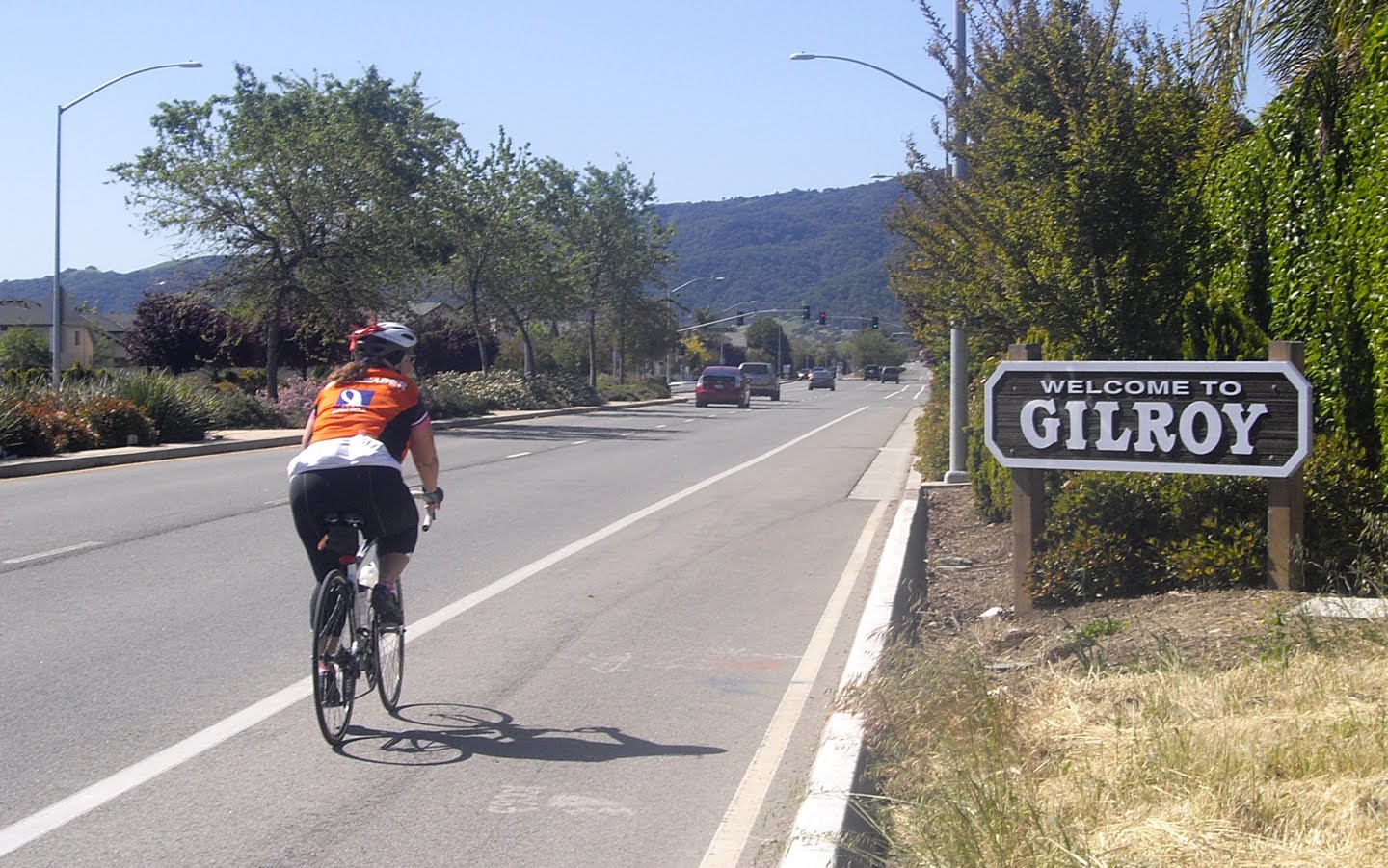
Our group of 37 brave riders had an absolutely awesome 55-mile ride today! Just one little problem, however: After we got to Gilroy, we had another 55-mile ride that most of us probably considered somewhat less than absolutely awesome.

Yes, the wind can give ... and the wind can take it all back. As we enjoyed the unusually brisk tailwinds around the reservoirs on our way to Gilroy, most of us figured out that our good fortune would soon come to an end. That's why ALC rides from San Francisco to Los Angeles and not the other way around! In June, the winds in coastal California are generally out of the northwest and west, and this gives us a big boost on several parts of the route, most notably the end of Day 2 and the end of Day 4.

ALC veterans who remember Day 5 of ALC8 or ALC9 probably felt a case of deja vu today. For the past two years, the Day 5 route has gone westbound from Solvang to Lompoc, directly into the wind. And that wind was even stronger than what we experienced today. The good news is that, this year, the Day 5 route has changed; not only is it about 25 miles shorter, it probably won't be subject to those nasty headwinds.

But weather is finicky, perhaps even more finicky these days than in the past. Last year, we even had some headwinds out of the east on part of Day 7. Although the route is designed to avoid traditional headwinds, anything can happen, and today you got some valuable experience in how to cope with headwinds, even if you don't particularly like them. Gear down, and aim to keep your cadence -- the rate at which you spin your pedals -- about the same as your normal rate. Don't worry about your speed being less. If you have experience riding in your drops, get down in that position to reduce your wind resistance (but don't lose sight of your surroundings). But remember, no drafting is allowed in ALC, even when the wind is crappy.

Conversely, when you have a nice tailwind, it often helps to sit more upright, even if you normally ride in your drops. By increasing the profile you present to the wind, you get an even bigger assist.

Even taking all that advice to heart, however, I was definitely feeling all used up by the time we reached San Jose today. And that was too bad, because conditions definitely improved somewhat after that. So I had to resort to a technique that I seem to use way too often: riding in a "degraded" mode in order to finish the day. I was generally down about two to three gears from where I'd normally be. I was taking many more short breaks (one to two minutes, perhaps every 5 miles or even more often). And, sure enough, I made it all the way to Mountain View, even though I came this close to taking the light-rail bailout. As always, it's a ride and not a race.

We also learned a few valuable lessons about weather and the environment today. This was a particularly dry day, much more so than on past rides, and the roaring wind didn't help either. And it was warmer than on most of our recent rides, with an official high today of 73F in San Jose. Most importantly, the relative humidity in San Jose at 3 p.m. was a bone-dry 17%. Did you notice that you needed much more water today than on past rides? And did you react properly to that? Alas, I did not, and one of the most telling signs of that is how often and how much you need to use the bathroom during a ride. I'll spare you the details, but I'm sure you're all too familiar with your performance in that area today. I could feel my throat getting dry, and that was a warning sign that I did not properly hydrate, even though I was taking in more fluid per hour than on any other ride this season.

In June, when we leave the immediate coastal areas and head inland, we often ride right into similar conditions, perhaps even a bit hotter. I can't stress enough the importance of proper hydration, particularly on multi-day events. And it's important that you hydrate with something more substantial than water; you don't want to run the risk of hyponatremia, which can happen when you don't adequately replace the electrolytes that your body is expelling. Today, my red headband was so covered in salt by Rest Stop 4 that I had to wash it in a sink -- and it was again covered in white by the end of the day.

And many of us also got uncomfortable experience with California allergies today. Whatever was in the air, it had many of us (including me) coughing and wheezing by the end of the day. Although it was unpleasant today, it was another good thing to learn before June, so you can medicate yourself appropriately to manage whatever effects you felt. Be careful with antihistamines, however -- they can put you to sleep, and the event medical staff can even pull a rider from the route if it's known that they've taken antihistamines.

How do I know this? Well ... this gets to another of today's many lessons. As we were riding on Day Road on the final stretch into Gilroy, I ran directly into several swarms of small insects, which proceeded to get all over my face. Fortunately, I did not have my mouth open at the time, or it could have been much more unpleasant. A few years ago on ALC, however, I was not as smart, and a bee managed to fly directly into my mouth ... and deposit its stinger inside my lower lip. I was riding by myself at the time, but I immediately dismounted and started giving a big thumbs-down signal. The first rider who came by stopped, and after I explained the situation, was able to reach into my mouth and locate and remove the offending stinger. My lip, of course, started to swell, so I stopped at the medical tent at the next rest stop. They told me I could just put some ice on it, or they could give me an antihistamine to reduce the swelling. But if they did, they'd declare me ineligible to ride the rest of the day. I declined their offer, and I learned that, fortunately, I was not allergic to bee stings. That's just one example of the many things that the ALC volunteer medical staff watches out for in the name of safety. They do an amazing job in June under very difficult conditions, with riders in a variety of emotional and physical states. Be sure to thank them!

Also thank the many volunteer bike techs who you'll see at every rest stop on the event. They're also there to help you, but they're not a substitute for a proper bike tune-up before June. If you haven't done so already, be sure to get your bike into a shop for a good once-over. It's important to schedule this now, because many bike shops have a backlog of work this time of year, and you obviously can't afford to be without your bike for too long during the peak of training season.

So ... what's next? If you don't know by now, we have just one ride left in our Mountain View rides for this season, and it's the big kahuna -- the fourth annual Altamont Pass Double Metric, two weeks from today on Saturday, May 14. And here's a piece of really good news: if you rode all of today's route, you're only about one hour away from completing the double metric! And since our ride-out time is one hour earlier than today, your finish time might be just about the same, if not earlier ... if the wind doesn't give us another unpleasant surprise.

Another piece of excellent news: the first forecast from The Weather Channel is out for ride day, and the early indication is that temperatures will be near normal, with a forecast high of 72F in Mountain View and only 76F in Livermore.

I won't go into too much detail here about the ride, because I've assembled a detailed FAQ list here that covers most of the important points. Find out more and RSVP here. Incidentally, it's very important that you RSVP for this event. I'll be assembling rider packets, and I'll be distributing rider lists to our SAG drivers so they can help keep track of everyone.

If you finished today's ride, you are more than ready to attempt the double metric. And if you didn't finish, you've still got one more weekend to complete the 100-mile ride (if you haven't done so already) that's required for entering the double metric, so don't fret. Why is this a rule for the double metric? Jumping directly to 125 miles from a much lower maximum distance can put you -- and the riders around you -- in a potentially dangerous situation, and that's something to avoid this close to June.

The Altamont Pass Double Metric is the longest one-day ALC training ride anywhere in the nation, and it's become part of ALC legend with epic rides and incredible stories. I hope you can join us on May 14 for the culmination of our training season together.

Today is just five weeks away from Day 0! Thanks again for being part of AIDS/LifeCycle.

Ride report: SF Day on the Ride (4/23/2011)

This year's all-new route (by yours truly, sort of) for Northern California ALC Day on the Ride offered riders a little bit of almost everything that you'll see on the event in June. And for some of you, it might have been an in-your-face introduction to what changes when the size of your riding group increases from 50 to more than 400 other riders.

Trying to get 400 riders out of a heavily urbanized area is tough. Trying to do it with 2,500 riders in June is even tougher. Fortunately, we have San Francisco police support on Day 1 in June to get us through the first few miles of the route. We didn't have that luxury yesterday, and we spent more than a few minutes cooling our heels in downtown San Rafael while we waited to use a series of crosswalks that are a part of the city's bike route system. Although such things usually don't happen in June, they can. A couple of years ago, we had to walk about a quarter-mile because a promised police escort through a construction zone in Paso Robles was late in arriving. And the start of Day 2 in Santa Cruz is almost always heavily congested, as we share the road with Monday morning commuter traffic.

If things like this happen in June, the best advice is simply to stay calm and take it all in stride, since there's not really anything you can do about it anyway. If you allow yourself to get wrapped up in the tensions and emotions of the moment, you can easily put your mind in a bad place at the start of a day, and that won't do anything to make your ride easier or more pleasant.

About the route being "mine," I say "sort of" because the route parameters I was given (about 65 miles, start and end at Mike's Bikes, do White's Hill westbound but not eastbound, rest stop at Nicasio Cheese Co.) imposed some rather hefty prerequisites on where we could go. It didn't take rocket science to figure out that there weren't that many ways to get from Point A to Point B to Point C. And much of the route copied the metric version of the Marin Century, so it's not like the brilliant idea to climb Wilson Hill was an original thought on my part. But I hope most folks were (pleasantly) surprised by the return through Novato, which rarely if ever shows up on any training rides.

Of the three possible routes I submitted, the one we did was actually the easiest of the three, so be happy we didn't climb the Marshall Wall! Longtime ALCers might recall that this legendary climb actually was part of DOTR in the past ... when the ride was 100 miles long, making it an even more challenging day.

Yes, there was a lot of climbing on Saturday's route -- about 4,120 feet, according to Bikely. How does that compare to June? This year, I'm estimating that Day 1 will contain about 4,750 feet of climbing over a distance of about 82 miles, compared to the 64 miles that we did yesterday. Day 1 has by far the most climbing of any day on the event in June, and most of it comes in the first half of the day. Combine that with the excitement that you'll naturally be feeling on that day, and it's probably easier than you might think.

But with so much climbing at the beginning of a seven-day ride, it's vitally important that you pace yourself. Don't put all your energy into completing the 82 miles to Santa Cruz in your "fastest" time; the very next day is almost 107 miles, and you need to be able to cover that distance (and the rest of the week) as well.

One of the lines from our safety speech is the admonition to "practice patience" because "not everyone has the same skills as you when it comes to riding a bike." This works in both directions, and if you're a regular on our Mountain View rides, you might not have had much experience in riding among slower riders. In June, you'll see just about every pace imaginable -- from riders who finish the day and arrive at camp even before the camp services, to riders who bravely struggle to finish every mile they can and bravely give it their all to stay just barely ahead of the rest stop closing times.

When you pass slower riders, do so carefully and politely. A few years back on the ride, it was very discouraging to hear a few riders calling out, "Superior rider on your left!" That's not at all consistent with the spirit of ALC, and it's just plain rude. Remember that you have no idea why another rider might be riding slow or fast, but no matter how far they cycle, they've brought in at least $3,000 for our beneficiaries ... and that's what matters.

Speaking of just plain rude, we got to share the first few miles of yesterday's route with some of Marin County's "finest" cyclists as they blew through stop signs and traffic signals in San Anselmo and Fairfax. I've pretty much given up on cycling in southern Marin County, and these rude cyclists are one big reason why. (Rude drivers and generally overcrowded conditions leading to too many road-use conflicts are other reasons why, of course.) While the ALCers I saw were generally law-abiding, I heard from another ride leader that one of our riders was spotted urinating by the side of the road in Fairfax. There's really no excuse for that, especially in Fairfax where plenty of more reasonable options were readily available. Yes, emergencies can happen, etc., but there's a reason why the admonition about restrooms is at the bottom of the route sheet. In June, riders used to make a semi-regular habit of using farm fields as toilets, and that destroys our good reputation with the communities we pass through. Don't do it!

And if you're worried about having a slower pace on yesterday's ride, don't worry. I was about 2 mph slower than my recent usual pace, and that's not uncommon for such hilly terrain. Also remember that there's no point in rushing through each day of the ride; you'll have 12.5 hours of available riding time on most days, so approach each climb with an eye toward the long haul -- and getting all the way to Los Angeles.

For me, yesterday's ride was tinged with just a little bit of bittersweetness. Since I made the decision not to ride in ALC10 this year (for a number of reasons, all of which are about me and nothing else), my "day on" the ride was as close as I'll get to "the ride" this year. The parts of life on the ride that veterans often take for granted -- the sign proclaiming the next rest stop just ahead, the latex-gloved rest stop crews handing out fresh fruits and bagels, the portapotty lines and the conversations that ensue, the knowledge that you're extremely well-supported every mile of the day, the cheering supporters who randomly appear along the route, the offbeat outfits -- are all part of what makes AIDS/LifeCycle so special, and I'm going to miss it this year. My decision to skip ALC10 still feels like the right decision for me ... the decision I "had" to make ... but I'm honored to be part of the volunteer team that's helping you get ready for the event. This is the point in the season where I see riders approaching the peak of their training, and that's always gratifying.

Don't forget our next Mountain View ride on Saturday: our 111-mile journey to Gilroy and back. The forecast looks rain-free with moderate temperatures, but with perhaps a slightly moderate headwind to challenge us on the return. At 111 miles, this ride is just a smidgen longer than Day 2 in June, and it's got about the same amount of climbing, so this is a perfect opportunity to test yourself with the same 12.5-hour time limit that you'll have in June. Details and RSVP are here. And remember, now that our meet times are so early, please keep noise to a minimum when arriving because we're right next to condominiums ... and don't count on the restrooms at the police station being open so early. There's a 24-hour Jack in the Box on Shoreline Blvd. near our location, and the Starbucks on Shoreline north of 101 opens at 6 a.m.

We're just three weeks away from the fourth annual Altamont Pass Double Metric! Thank you for being part of AIDS/LifeCycle.

Ride report: Distance Training #8 (4/16/2011)

Go, riders!

If you had any lingering doubts about whether you're ready to ride in June, I hope today put those doubts in the trashbin of history. Our group of 42 intrepid riders -- the most ever for an ALC century ride in Mountain View! -- conquered a challenging 100-mile route that had hills, headwinds, and even some temperatures warm enough to be slightly annoying at times.

Except for two riders who had made earlier plans to leave the ride early, each and every rider completed the entire route. That's an amazing accomplishment, not just for each of you as individuals, but for all of us as a group. The way that I saw riders helping one another today is a perfect example of the teamwork that will get you to Los Angeles in less than two months.

That's not to say that today's ride was easy. It wasn't supposed to be! Whether today was your first century ever or your 37th century (that would be me), 100 miles in one day is a singular achievement that is universally recognized as a pillar of achievement in the sport of cycling. And I can assure you that they pretty much don't ever become "easy."

We got a good sample today of how the weather can change dramatically during a long day of riding -- and that's an important lesson to remember for June. From a fairly cool start to the day, we went into a little light fog, with the sun peeking through now and then and quickly warming things up for a couple of minutes, then back into the clouds in the East Bay, and into some warm and windy conditions as we went farther south. By the time I got to Los Gatos, I was wishing I had worn leg warmers instead of long-legged pants because they were too much for even me.

Dressing in layers is essential in June, because the temperature extremes can be even greater than what we experienced today. Ride-out temperatures are often in the 40s, even at the coast, and on a day such as Day 2, afternoon temperatures can easily rise into the 90s or even higher. You need to keep your body warm when it's cool, but you need to let your body breathe when it's hot -- and you need to do it with clothing that you can carry with you all day. There are two reasons for that: There's no clothing drop along the route during ALC, but you wouldn't want that anyway, because you'll often be adding layers back toward the end of a day as it gets cooler.

You also probably noticed that your calorie requirements went through the roof today. Depending on your body, you probably burned anywhere from 3,500 calories to 7,000 calories or more on just this one ride. It's usually not practical to replace all of that while riding (your stomach would probably be quite unhappy if you tried), but you need to put a steady stream of calories into your body during the ride ... usually about as many as you can comfortably take, which is about 300 to 400 an hour for many cyclists. This is one of those magic numbers that you should be learning for yourself during these final weeks of training.

One way that ALC differs from our training rides is that there are usually more rest stops during the day. Most days have four rest stops plus a lunch stop; a few days have an additional water stop. (And that's just the official stops. There are many other unofficial stops that have become established parts of the ALC lore. In fact, the unofficial artichoke stop on Day 2 is now so well established that it has a closing time just like the official rest stops!) This means that you'll be able to stop more often to take care of your various needs. But remember: Don't linger at rest stops; you need to make steady progress during each day to stay ahead of the rest stop closing times, which are usually set at a little more generous than what you've seen on our rides.

On very long rides, it's all too easy to start forgetting about the ALC safety rules, particularly toward the end. That's unfortunate, because that's when the safety rules are often most important -- precisely because so many riders are heavily exerted by then and perhaps not as likely to always do the right thing on the road. Even at mile 90, always call out and use hand signals.

Another of the ALC safety rules is that we always ride single files -- even in marked bike lanes. This isn't required by the California Vehicle Code, but ALC requires it because our group is so large that cyclists need room to safely pass. Catching up with friends is better left for the rest stops and campsites. Another thing that the CVC doesn't prohibit is playing music through speakers while riding, but ALC doesn't allow that either because it could potentially interfere with riders communicating safety information.

We don't have safety patrols on training rides, but in June there will be staff vehicles dedicated to observing cyclist behavior and noting the rider number of anyone who breaks the rules. Don't get a dreaded ALC ticket attached to your bike in camp -- or, even worse, don't return to bike parking the next morning and find that the staff has impounded your bike until you come talk to them. It takes time and it's embarrassing, but it's done because safety is so important to ALC.

Apologies are in order to a few riders who got confused at the intersection of Clayton and Story in San Jose. The street sign wasn't very visible, and a few folks missed the turn. When I got there and saw the situation, I started doing traffic control, but the faster riders got there before I did. That was part of the "new" section of the route this year, and the lesson is learned -- next time, the route sheet will be more explicit about what that intersection is and what to do once you get there.

How do you follow up a successful 100-mile ride? By riding again the next day, of course! If you're not doing it already, this is the time to be adding that second day. That's the extra "oomph" that will set you apart from "mere" century riders and give you the added skills to successfully complete ALC10. Don't feel obligated to ride tomorrow, especially if this was your first century ever, but if you are riding tomorrow, consider one of the many ALC training rides around the Bay Area. Down here, the Sunnyvale Cat-2 group will be running a 75-mile "kinda hilly ride," but it's running at the slower 10-12 mph pace, so you can take your time. It's got an early start tomorrow, but you can still RSVP here.

And don't forget next Saturday's official Day on the Ride in San Rafael. It's "only" 65 miles (only!), but it's got quite a bit more climbing than we did in our entire 100-mile ride today (although it's about 10% less climbing than last year's Day on the Ride). It's a challenging route that will take you into parts of Marin and Sonoma counties that you might never have seen before -- and because the ride starts way up in San Rafael, you won't have to deal with the crowded riding conditions in Sausalito and Mill Valley. Day on the Ride costs $20, but that also gets you lunch and dinner plus amazing roadie support throughout the day. Tickets are required, and I hear that the food orders are going in on Monday, so now would be a good time to get your ticket here.

Our next ride comes in two weeks on Saturday, April 30, and it's another classic. It even sounds impressive to say, "I'm riding to Gilroy and back on a bicycle!" The first half of the ride is scenic with rolling hills as we go around the Uvas and Calero reservoirs. After we have lunch in Gilroy, we then head up the valley through Morgan Hill and back into San Jose on a route that's almost totally flat. But hold on. If the wind is blowing out of the north (like it did for part of the day today), that flat route can suddenly become very challenging indeed. On the other hand, if the wind magically comes out of the south (like it did on this ride last year), the return trip can be an unexpected, er, breeze. Anything can happen on this epic 111-mile ride, and you're invited to be part of it. Find out more and RSVP here.

And finally, a visit to the Lost and Found Department. I ended the day with another rider's fleece vest in my car. Because my mind was elsewhere this morning, I failed to note whose it is. So if it's yours, send me a note, and I'll make arrangements to get it to you ASAP. I know how important a fleece vest can be in the morning!

Congratulations to everyone on an amazing day, thank you for riding, and thank you for being part of AIDS/LifeCycle.

All of the photos are from the top of Silver Creek Valley Road, a truly amazing hill in both directions! Mount Hamilton is visible in the background.

Getting ready for your first century?

Saturday is the first of three century rides (100 or more miles) to wrap up our Distance Training rides for 2011. If you've never cycled a century before, you're probably excited ... and probably a little nervous. The good news is that you'll be part of a group of friendly cyclists, and you'll have outstanding support from our volunteer SAG drivers.

Don't wait until Friday night to plan. Here's a small selection of links to help you prepare for that century.

  • Riding Your First Century: "For me, this part of the ride, from roughly the 60 to 80 mile points, was the most difficult. Fatigue starts to set in at this point but the realization that there is much distance yet to be covered is still in the forefront of the mind. This is pretty typical among distance riders to experience a bit of a low during this time period. It helps to be prepared for this mental low, and helps even more to ride with friends! Especially friends who have experienced this aspect of distance riding and will help you though the difficult times. At this time, it is important to remember why you are out on the bike."

  • Your First Century: "Do not latch onto some group that blows past you. Chances are good that they’re going faster than you can sustain for 5 hours. The hardest part of the ride is about 2/3rds of the way through. Push through this low spot, make sure you’ve been eating & drinking enough, and if you’ve trained well, you’ll get a second wind on the other side."

  • Nutrition for a Century or Double: "Novice riders tend to either eat too little before a big ride, fearing an upset stomach, or else eat too much, fearing that they will bonk. Today is not the day to figure out what to eat before riding! You should experiment in training, and on event day have a tried-and-true plan of familiar foods and fluids. Some cyclists prefer a light breakfast the hour before a century or brevet; some prefer food at the starting line; others have learned to wake up at 4 a.m., eat a bowl of oatmeal, and then go back to bed."

  • Another First-Century Report: A classic from 1992, this first-person report is by some fool who didn't train properly, didn't eat properly, and didn't ride properly ... but still managed to complete his first century from San Jose to Hollister and back (a solo, unsupported one at that), albeit not on the planned route.

    Our weather for Saturday is looking great. See you there.

    Photo: A scene from the 2010 South Bay Century.
  • Ride report: Distance Training #7 (4/2/2011)

    Go, riders!

    If you were with us earlier in the season, you might recall our 50-mile training ride (it seems so long ago!) where the motto was "Pace yourself." Just in case anyone hadn't fully internalized that message yet, today's intrepid group of 36 riders was reminded in spectacular fashion that one of the most essential AIDS/LifeCycle skills is the ability to pace yourself on long rides that cover a variety of terrain and riding conditions.

    Today's hills, headwinds, traffic, and weather were all challenging, but taken individually, they were all doable. Combine them into a riding day that lasted somewhere between seven and nine hours, however, and the level of challenge rises significantly. (That's why there are so few endurance cyclists!) And if you focus too much on the intermediate goals of the day -- rather than finishing the entire day -- your mind can start to play games with your body.

    For example, take the climb up to the top of the Hayward hills. I certainly "sold" that as the prime attraction on today's ride, but it definitely wasn't the only thing that we contended with. And once you reached the top of that hill, you still had 52 more miles of cycling ahead of you! If you allowed your sense of accomplishment to turn into a sense of relief, then it's entirely possible that you weren't looking forward to the rest of the day with the same level of eager anticipation ... and the rest of the day might have been harder for you as a result. That's especially true if you put most or all of your energy into conquering that hill.

    When you ride from San Francisco to Los Angeles, that's the type of mind game that can happen ... and that you must resist.

    Many days of the ride have a "star attraction," such as Quadbuster or the Evil Twins, but they're a tiny, tiny part of each day's total distance. (In fact, both Quadbuster and the Evil Twins come very early in their respective days.) Even if you think you can ride at a particular intensity to conquer a hill, keep in mind that there's almost always a lot more riding still to come, and you have to be physically and mentally ready to deal with it ... with the same positive attitude that carried you to the top of the hill.

    Now, here's the good news: There are no hills on ALC as steep and long as Harder and Hayward. And some more good news: There are no more hills this steep and long in the remainder of the Distance Training rides this season! From here on out, we focus mainly on building distance into the "ultra-cycling" range for our double metric century on May 14. Sure, there will still be some hills, but the climbing will be much more evenly distributed throughout our riding days. And this will give you many opportunities to practice your pacing discipline.

    Part of that discipline involves proper nutrition. The strategies that worked for you at 50 miles might not have worked so well at 70 miles, and your 70-mile plan might not have worked so well for 90 miles. In my case, I've had good luck so far this season by switching to a high-calorie endurance powder: It's kept my mood and attitude far more positive than it's been on difficult rides in the past. But today, I only brought enough powder to get me to Rest Stop 3, thinking my regular food consumption would suffice for the rest of the day. I was wrong, because by Rest Stop 4 just 10 miles later, my mood was starting to turn foul. At Rest Stop 4, I ended up resorting to one of my classic servings of feel-good ride food -- a particularly unhealthy variety of sub sandwich -- and that was enough to get me back to Mountain View without snapping at anyone. But as I continue to get experience with the endurance powder, I learned today that I shouldn't skimp on the really long rides.

    Your personal nutrition preferences probably will be different, and this is prime time to be discovering what works and doesn't work for you on very long-distance days. In June, you'll be getting a full lunch every day on the ride (usually a big sandwich with chips and cookies and, sometimes, pasta salad or another side) -- and you can have as many as you want -- and you'll also have access to unlimited snacks at every rest stop. But don't take that as permission to stuff your stomach full of lots of different foods you don't normally eat in combination. Stomach distress is very common in ultracycling, and food clash is one of the easiest ways to make it happen. Stick with things you know.

    (Incidentally, remember that Powerade is the energy drink that's served on the ride in June. If you can't tolerate it, this is the time to find out. It's served from giant coolers, so you can add water to reduce the intensity if needed ... but if your stomach can't stand it at all, then you'll probably want to consider bringing your own drink powder with you in June, probably poured into single-serving bags or prepackaged servings.)

    Another important short-term goal, if you're not already doing it, is to focus on consecutive days of riding. The traditional ALC rule of thumb is that you should be able to ride two 100-kilometer (62-mile) days in a row and then feel like you could ride a third. You can combine the Distance Training rides with any of the Sunday rides around the Bay Area -- Sunnyvale, Orinda, or San Francisco -- and increase your multiple-day endurance. In the past, I've tried to make time available once per season to do a third consecutive long-distance day, typically on a Friday or Monday. If your schedule allows you to do this, you certainly can't go wrong by having this experience before June.

    What's next? In two weeks, we'll cross an important psychological milestone: our first of three century (100-mile) rides. We'll do a big loop around the South Bay, with a few little surprises along the way to keep things interesting. But no giant hills, I promise! (Just a few not-so-giant ones.) Even though the ride is 11 miles longer than today, the total climbing is about the same, and it's much more spread out throughout the day. Find out more and sign up here.

    And registration is now open for the Fourth Annual Altamont Pass Double Metric, our culminating event on Saturday, May 14. This 125-mile ride has become an epic part of the ALC folklore, and it's the perfect way to make that 108-mile Day 2 in June seem a whole lot shorter. And again, even though it's much longer, it's only got about as much total climbing as did today's ride. I've posted an extensive list of questions and answers about the ride here, and you can read the full ride description and sign up here.

    Also, don't forget this year's Day on the Ride coming up Saturday, April 23. This is the last major event before the ride, and it's an ideal chance to ride with 600 other ALCers and experience what an actual day on the ride will be like -- rest stops, portapotties, sweep vehicles, bike tech, motorcycle support, and awesome roadies. Better yet, this year's route is all-new and starts up north in San Rafael ... so that means no riding in southern Marin -- no Sausalito, no Corte Madera, no Ross -- and no Golden Gate Bridge. It is, however, a challenging 65-mile route with a fair helping of hills, so it's also a great way to get experience riding with cyclists of all skill levels -- something that will be part of your life for the whole week in June.

    Day on the Ride is an RSVP-only event open only to registered ALC10 cyclists, and I highly recommend it, especially for first-year ALCers. It will cost $20 per rider ... but that also includes a full lunch (just like in June) and a post-ride dinner in San Rafael. What a bargain! Ticket sales begin soon; find out more here.

    Congratulations to everyone on a great day today over a challenging route. I hope you'll come back on April 16 for our South Bay Century. Thank you for being part of AIDS/LifeCycle.

    2011 Altamont Pass Double Metric FAQ

    Last updated May 8
    What is a double metric century?
    Who should ride the Altamont Pass Double Metric?
    Is qualification required?
    Is pre-registration required?
    Must I be registered for AIDS/LifeCycle?
    UPDATED What happens on ride morning?
    Can I use the toilet at the nearby police station?
    UPDATED What's the weather going to be like?
    Will we ride if it's raining?
    What's the route?
    Is the route marked?
    Will we encounter other events along the route?
    How much does the ride cost?
    How fast do I need to ride?
    Can I really ride just 12 mph?
    Can I bring bicycle lighting and complete the route after sunset?
    What happens if I'm not riding fast enough?
    Do I have to ride the entire 200-kilometer route? Can I take a short cut?
    What types of SAG service will be available?
    Are hotels available near the meeting location?
    Got more questions? Email me. Items of general interest will be added to this list.

    What is a double metric century?
    A double metric century is 200 kilometers, or approximately 125 miles, of bicycling in a single day.

    Who should ride the Altamont Pass Double Metric?
    This ride is designed for AIDS/LifeCycle riders who desire an extreme challenge to mark the culmination of their training season. The longest day on AIDS/LifeCycle is only about 108 miles, so you do not need to do this ride to be ready for the event. However, many riders have found that taking part in the double metric helps make the longest days of ALC seem a little bit easier.

    Is qualification required?
    You should have completed at least a 100-mile ride before May 14. Otherwise, the jump in mileage might be too much, and you might not be able to complete the ride, or you might injure yourself just a few weeks before AIDS/LifeCycle 10. You don't need to tell us what century you've done, but please honestly assess your abilities.

    Is pre-registration required?
    No; but we'd really appreciate it if you did. This will let us give an accurate roster to the SAG drivers so that they can identify or locate you if necessary during the day. To RSVP, use this link to send email.

    Must I be registered for AIDS/LifeCycle?
    No; this ride is open to everyone who can ride fast enough and who agrees to ride according to our rules. If you're not yet part of ALC, perhaps this ride will persuade you to register for next year's event!

    What happens on ride morning?
    Our meeting location is next to condominiums (and a police station), so please be quiet and respectful when arriving. You should plan to arrive at the meeting place in downtown Mountain View by 5 a.m. so that you have plenty of time to unload your bicycle and sign in. Although you will park in the same place as we've done throughout the season, sign-in and warmup will take place one block away, on the other side of Shoreline Blvd., as shown here:

    After you arrive, ride or walk one block west on Evelyn Street under Shoreline Blvd. into the large parking lot, where you will sign in and receive your frame and helmet numbers. After the safety speech, we will ride out past the parking area, so you can visit your vehicle if necessary before the ride begins. At sign-in, you will receive a frame number for you to affix to your bicycle frame, and a helmet number for you to put on the left side of your helmet. (This is separate from your ALC rider number.) The frame number will be important throughout the day for SAG drivers and other riders to identify cyclists who are part of this ride. Warm-up exercises and the route briefing begin at about 5:30 a.m. All riders must be already signed in, present, and attentive at 5:45 a.m. for a mandatory safety speech.

    Can I use the toilet at the nearby police station?
    Sorry, no; the police station isn't open for public access that early in the morning. Please take care of your restroom needs before arriving, and make sure your water bottles are full and ready to go.

    What's the weather going to be like?
    Early forecasts suggest that this year's ride could see the lowest temperatures of any year so far, with temperatures in the 50s and lower 60s through most of the day. We might experience light to moderate headwinds for part of the afternoon. There is a very slight chance of light showers. In short, could be just about anything. Past years of this event have seen temperatures above 100 degrees, but in 2010 we had a pleasant day in the 50s and 60s. The historical temperature data for Livermore on May 14 shows an average high of 77 degrees and a record high of 98.

    Will we ride if it's raining?
    Probably yes. We will cancel the ride only if there is steady, heavy rain on ride day or if there is a likelihood of thunderstorms or other severe weather.

    What's the route?
    You will receive a route sheet on the morning of the ride. We expect that the route will be mostly unchanged from last year. This year's preliminary route is here; the route from 2010 is here. Last-minute changes are possible due to road work (especially along Mission Blvd. in Hayward) and other unforeseen events.

    Is the route marked?
    No; there are no pavement arrows, signs, or other markings. There are approximately 65 turns on the route, so you will need to refer to your route sheet frequently during the ride; consider a map holder or binder clips. On some parts of the route, you will see pavement arrows of various colors and styles; these are for other events to other destinations, and you should not follow them.

    Will we encounter other events along the route?
    We know of no other organized cycling events that will be following our route on May 14. The rodeo that has taken place on ride day in Dublin during past years is scheduled for a different date this year. Also, there is no street festival in downtown Mountain View on ride day this year.

    How much does the ride cost?
    It's free! Our six rest stops are all at coffee shops, restaurants, and grocery stores, so you will need to buy or bring your own food and liquid. If you use any of the nonperishable supplies from a SAG vehicle, such as extra tubes, please consider making a small donation to the driver to help cover the replacement cost of these items. The SAG drivers also pay for gas, food, and water and are not reimbursed by ALC, so you are encouraged to help cover their costs if you are able to do so.

    How fast do I need to ride?
    This ride is designed for riders who can maintain an average speed of at least 12 mph on flat to rolling terrain. We love all cyclists, but the 12 mph pace is necessary to complete the route before sunset.

    Can I really ride just 12 mph?
    Yes! There will certainly be riders who are faster than 12 mph, but if you ride a steady 12 mph pace and do not take too long at rest stops, you can finish this ride in 14 hours or less. There will always be at least one ride leader at the back of the group, so you are guaranteed to never be the slowest rider. Here's some math: If you take half an hour at five of the six rest stops and give yourself an hour for lunch at one rest stop, and if you assume that you'll spend 15 minutes waiting at traffic signals and stop signs, then you need to average 12.2 mph to finish before sunset. Plan on going a little faster on flat terrain and a little slower uphill.

    Can I bring bicycle lighting and complete the route after sunset?
    Sorry, no. AIDS/LifeCycle rules require at least one ride leader to be behind the last rider at all times, so you can't finish on your own. This is for your own safety!

    What happens if I'm not riding fast enough?
    Each of the six rest stops will have an official closing time noted on the route sheet, timed to allow you to complete the ride within the 14 hours of daylight on ride day. This is to help you gauge your progress throughout the day and keep you on track to return to Mountain View before sunset at approximately 8 p.m. If you are in a rest stop at its closing time, you will need to resume riding immediately, or you can choose to end your ride there. In some cases, a SAG vehicle might be able to jump you to the next rest stop and allow you to resume riding, but this service is available only if SAG vehicles are not otherwise occupied with more important tasks.

    Do I have to ride the entire 200-kilometer route? Can I take a short cut?
    There is no official "short route" for this year's ride. However, there are several places along the route where you can skip ahead from 5 to 37 miles, and several BART and VTA light rail stations are on or near the route. If you decide to shorten your ride or leave the route, you must let a ride leader know, either in person or by leaving voicemail or a text message on a ride leader's cellphone. Phone numbers will be on the route sheet that you receive on ride morning. Also, if you skip far ahead of other riders, you will be out of the coverage area of SAG vehicles, so you will not be able to receive support. The SAG vehicles need to be available on the official route, so if you leave the route, you'll be on your own.

    What types of SAG service will be available?
    We will have several volunteer SAG drivers stationed along the route and at rest stops. Most will have basic supplies like water, ice, light snacks, and some basic bicycle equipment such as a floor pump and extra tubes. In some cases, the SAG vehicle can transport you to a nearby location if you are unable to continue riding. Please note, however, that the SAG vehicles are not a personal taxi service, and if you decide to stop riding, it is your responsibility to get transportation for you and your bicycle back to Mountain View or some other location. Please respect and thank our volunteer SAG drivers who are helping make your ride a success.

    Are hotels available near the meeting location?
    If you are coming from far outside Mountain View, you might want to consider getting a hotel for the night before the ride, so that you can arrive on time. Several hotels are available in a variety of price ranges within five minutes of the meeting location; any of the online booking services can steer you in the proper direction. Note, however, that the Pacific Euro Hotel, one block from our meeting location, is largely a residential hotel and might not offer you the experience you need in order to be ready to ride in the morning.